Tennessee Titans Secret Practice Scandal

Tennessee Titans Secret Practice Scandal

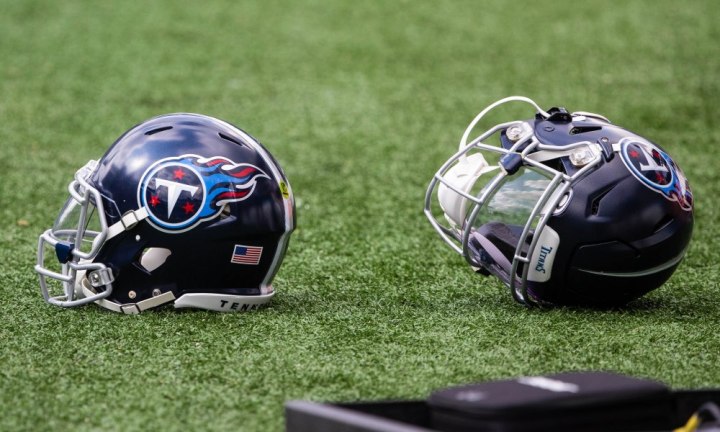
On the 29th of September, the NFL closed all Tennessee Titans facilities due to eight players testing positive for COVID-19. Along with announcing the closure of the facilities, “the NFL informed the Titans that they could not gather outside the facility for any reason” (Moraitis, 2020, pp. 6). Unfortunately, some of the Tennessee Titans players did not follow these protocols, “a group of Titans, which included quarterback Ryan Tannehill, worked out at Montgomery Bell Academy in Nashville on 30 September” (Guardian sport and agencies, 2020, pp. 2). It is very alarming that it took less than a day for these individuals to break the NFL COVID-19 safety protocols. However, because of their actions, the NFL is investigating into the team’s outbreak. Moraitis (2020) states, “The NFL reportedly has pictures of Titans players not wearing masks while at the team’s facility” (pp. 7). In their investigation, they are also looking into whether symptoms were being timely reported, and tracing devices were being worn. It is very unlikely the Tennessee Titans are going to get away with this without facing any sort of consequence. In fact, there has been a buzz going around the league that says the punishment for the Titans may even be historic, “given the news that the team apparently gathered to practice last week after expressly being told not to do so, the Titans could be facing a consequence the likes of which the NFL has never seen” (Moraitis, 2020, pp. 6). 

I find it remarkable that the head coach for the Tennessee Titans or even the owner has yet to come forward and say something about the issue at hand. However, to provide the most recent update for the crisis, “The Titans’ outbreak increased to 23 on Thursday,” and the “facility remains closed with the team still prohibited from any in-person activities” (Guardian sport and agencies, 2020, pp. 5). 

Since this is an evolving crisis, I wanted to look at how the players have responded so far to the situation, and provide suggestions using what we have learned so far this semester at what I think the PR team should have the representative of the Tennessee Titans say and/or do. To begin, let’s look at the Titans fullback, Khari Blasingame’s response to quarantine due to his team having a high number of cases. Bacharach (2020) states, “Blasingame tweeted an image from the TV show ‘SpongeBob SquarePants.’ In it, one of the show’s characters, Squidward, is peering through window blinds to see two other characters, SpongeBob and Patrick, having fun without him. Blasingame’s caption: ‘mood’” (pp. 3-4). This humorous tweet was not a good look for Blasingame of the Tennessee Titans. We know that reputations are threatened during any crisis, and because Blasingame was taking the situation lightly, this reflected poorly on the Tennessee Titan organization. 

If I were the owner of the Tennessee Titans I would look to Coombs’ “General Guidance for Using Crisis Response Strategies” when deciding my next step. Looking through the table it is very clear there is only one option for the Titans front office, which is to form a full apology. Coombs (2017) states that an apology must be formed for “any crisis where there is evidence that the organization is the primary actor responsible for the crisis” (Table 7.2). The Tennessee Titans need to formulate a full-apology where they accept responsibility for breaking the COVID-19 safety protocols and communicate how they intend to practice better safety measures during practices. I also believe it is important for them as an organization to repair their reputation by apologizing to the school district where their players were caught secretly practicing, as well as the teams they were supposed to play these coming weeks who now have to change their schedule. 

References

Bacharach, E. (2020, Oct. 5). Titans react to COVID-19 positive tests, life in quarantine. Nashville Tennessean.https://www.tennessean.com/story/sports/nfl/titans/2020/10/05/tennessee-titans-use-memes-to-react-to-covid-19-positive-cases-quarantine/3623654001/

Coombs, W. T. (2019). Ongoing crisis communication planning, managing, and responding (5th ed.). Thousand Oaks, CA: Sage Publications.

Guardian sport and agencies. (2020, Oct. 8). Titans could face ‘historic’ punishment for secret practice amid Covid outbreak. The Guardian. https://www.theguardian.com/sport/2020/oct/08/tennessee-titans-coronavirus-outbreak-discipline

Moraitis, M. (2020, Oct. 8). Titans likely to face punishment for protocol violations, could be 

‘historic’. Titans Wire. https://titanswire.usatoday.com/2020/10/08/tennessee-titans-covid-19-outbreak-punishment-historic/
NFL Black Lives Matter Response

NFL Black Lives Matter Response

This week’s crisis of the week is the NFL’s response to the Black Lives Matter movement. I chose this crisis in light of the 2020 season opener between the Kansas City Chiefs and the Houston Texans being the day this assignment is due.

The league was brought into the national discussion about police brutality and systematic oppression back in 2016 when the San Francisco 49ers quarterback, Colin Kaepernick knelt during the national anthem to show he wouldn’t “stand for a country that oppresses black people and people of color” (Mather, 2019, para. 6). At the time, the league responded to his protest by saying, “Players are encouraged but not required to stand during the playing of the national anthem” (Mather, 2019, para. 9). Fast forward to May 23, 2018, NFL owners ruled that players could no longer kneel during the national anthem. The league announced that if players felt the need to protest they were welcome to stay in the locker room during the national anthem.

However, there has been a recent shift in the league’s public stance on the peaceful protest movement. When a dozen black NFL stars released a powerful video in which they asked the NFL to “admit it erred in its response to peaceful NFL player protests of police brutality and systemic oppression, condemn racism and affirm that Black Lives Matter” (Wells, 2020). The league finally listened. Following that day, NFL commissioner, Roger Goodell responded to the video posted on social media by the players by posting his own video from the NFL’s official Twitter account. In the video, Goodell said, “We, the National Football League, condemn racism and the systematic oppression of Black People. We, the National Football League, admit we were wrong for not listening to NFL players earlier and encourage all to speak out and peacefully protest. We, the National Football League, believe Black Lives Matter” (Wells, 2020, para. 3). He also acknowledges in the video that the NFL was “wrong for not listening to FL players earlier and encourage all to speak out and peacefully protest” (Wells, 2020, para. 4). Although Goodell didn’t mention Kaepernick’s name in his statement, the shift in the NFL’s stance on peaceful protesting says enough on how much power the NFL players have over the organization.

With that being said, I would like to tie this crisis to this week’s reading. According to Coombs (2019), the power in crisis management is “the ability of the stakeholder to get the organization to do something it would not do otherwise” (p. 45). The NFL changing its stance on peaceful protesting during games is a real-world example that demonstrates this concept.

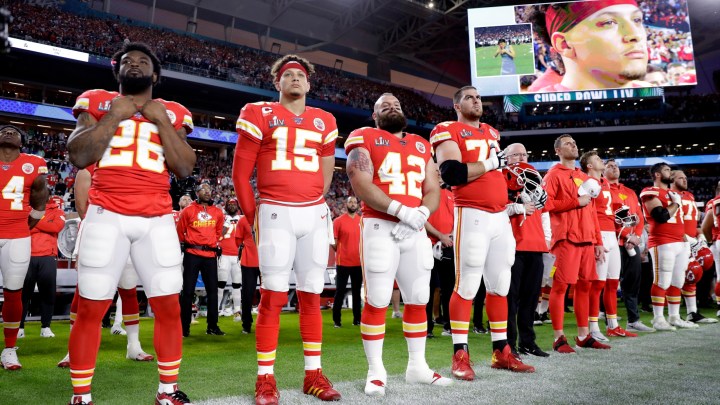
When the group of players, including Super Bowl LIV champion Patrick Mahomes, Deshaun Watson and Saquon Barkley composed the video and posted it to Twitter it went viral. The video gained massive positive feedback from other players and organizations. Doug Williams, the first Black quarterback to start in a Super Bowl stated that Mahomes’ involvement in the video was huge, “with all these young people out here marching in the streets and demanding change, it’s a different time right now. You see that there are so many young people leading. It says a lot he wanted to be involved in pushing for that change. It was very powerful” (Reid, 2020, para. 11). By these famous athletes using their voices, working in coalition with Black organizations, and taking a stand against their “employer” they proved as stakeholders they held the stronger power over the NFL.

The stakeholder (NFL players) created the video that went viral and pressured the organization (Goodell and NFL) to check off all the items they requested. The power of the stakeholders and the video they created forced the organization to do something they would not do otherwise which was to publicly acknowledge they were wrong in the first place by not listening to the NFL players earlier.

References

Coombs, W. T. (2019). Ongoing crisis communication planning, managing, and responding (5th ed.).

Thousand Oaks, CA: Sage Publications.

Mather, V. (2019, February 15). A timeline of Colin Kaepernick vs. the N.F.L. The New York Times.

https://www.nytimes.com/2019/02/15/sports/nfl-colin-kaepernick-protests-timeline.html

Reid, J. (2020, June 8). The power of Patrick Mahomes saying ‘Black Lives Matter’. The Undefeated.

https://theundefeated.com/features/the-power-of-patrick-mahomes-saying-black-lives-matter/.

Wells, A. (2020, June 5). Roger Goodell answers NFL players’ video on equality: ‘Black Lives Matter’.

Bleacher Report. https://bleacherreport.com/articles/2894967-roger-goodell-answers-nfl-

players-video-on-equality-black-lives-matter.