Uber, USD, & The American Heart Association’s COIVD-19 Communications

Uber, USD, & The American Heart Association’s COIVD-19 Communications

I decided to center my discussion around my discoveries and observations of three different communication forms about the Coronavirus. The examples I examined include Uber’s “COVID-19 Resources” pageUSD’s COVID-19 communications, and The American Heart Association’s response to COVID-19.

I will begin with my analysis of Uber’s communications about the Coronavirus. When scrolling through Uber’s COVID-19 resources, my initial observation was they clearly showcased how they were proactive with communities. They have an entire portion of the page that is designated to communicating how they are “committed to helping,” and were “pledging 10 million free rides and deliveries of food for frontline healthcare workers, seniors, and people in need around the world”. Below that statement they include links to other pages that go more in-depth about how as an organization they are supporting healthcare workers and local restaurants while also prioritizing feeding first responders and delivering essential goods across US and Canada with Uber Freight. Although this portion stuck out to me the most, as I continued my search, I discovered Uber included many other elements the Harvard Business Review article suggested. For example, they have portions designated to communicating with their employees, customers and shareholders as well. The only suggestions I have for Uber’s COVID-19 response are to include an article or page that provides their crisis-response team and how they can be reached, and to utilize the textbooks crisis response strategy of “victimage.” After really digging through their site, I found a link to an Uber blog post that shares their financial assistance plan to ensure their drivers are being taken care of during this tough time. It would be beneficial for Uber to showcase this more by not making it so hidden on their COVID-19 resource page. 

The next example I have is our very own USD COVID-19 communications site. Putting bias aside, I truly believe The University of South Dakota has done a good job of communicating with its students and faculty during this global crisis. Their COVID-19 dashboard shares “real-time data indicating the number of known cases of COVID-19 for students, faculty and staff,” they also make sure to note that the “data will be updated as frequently as possible.” The University’s response is spot on with the Harvard Business Review suggestion to be “as transparent as you can.” I have no advice for this example other than to keep it up! Unlike Uber, USD provides a tab that lists their taskforce, and knock each of the five steps includes in the case study out of the park.

 Lastly, I chose to share my observations about the American Heart Associations’ response to COVID-19 and what they are doing to make an impact during the pandemic. The first thing I noticed and appreciated immensely when looking at their communications is that at the top of their site, they provide a “COVID-19 Live Chat.” I hadn’t seen this before and thought it was a great resource for anyone searching for reliable information. They state, “If you need current, science-based information about the COVID-19 pandemic, we’re here available to help via live chat or call our Customer Service at 1-800-242-871.” I had difficulty determining whether the American Heart Association’s communications followed the case study or textbooks suggestions more. I am not sure being a nonprofit plays a role in this, but I know their communications weigh more because their target audience is at high risk if they contract the virus. Overall, as I scroll through their site, I lean more on the case study side. The AHA has the live-chat option, but also the latest news page to communicate with its audience. They also have a link specifically for heart patients that explains what they can do to help. Lastly, they include a “We Need Your Support” tab that asks for your support during this crucial time while they are “dedicating news resources to COVID-19 while helping keep patients informed and safe.” This is another example of the victimage response strategy; only this time, it is a nonprofit rather than an organizational example. 

To conclude my discussion post, I would like to state my opinion on whether these responses were examples of good or bad crisis communications. I believe all three of these forms of communication were good examples. However, I was pretty clear about how impressed I was with USD’s communications. I think that if other organizations were to follow more of a guideline similar to our universities, they could exceed their audiences’ expectations for communications about the Coronavirus. I realize that this is not necessary, but by going the extra mile and being even more transparent, their reputation will benefit greatly. 
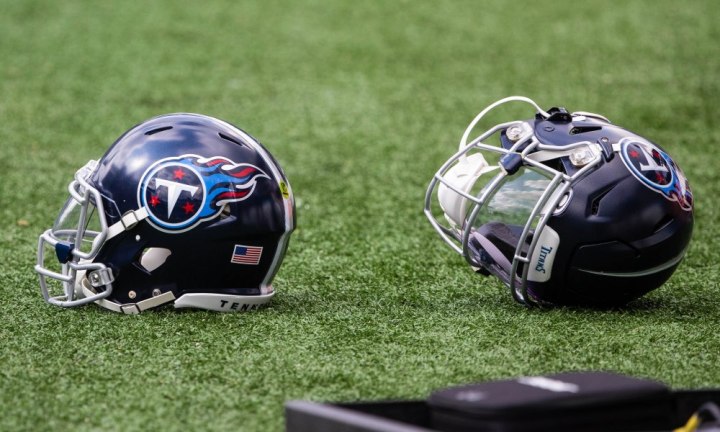
Tennessee Titans Secret Practice Scandal

Tennessee Titans Secret Practice Scandal

On the 29th of September, the NFL closed all Tennessee Titans facilities due to eight players testing positive for COVID-19. Along with announcing the closure of the facilities, “the NFL informed the Titans that they could not gather outside the facility for any reason” (Moraitis, 2020, pp. 6). Unfortunately, some of the Tennessee Titans players did not follow these protocols, “a group of Titans, which included quarterback Ryan Tannehill, worked out at Montgomery Bell Academy in Nashville on 30 September” (Guardian sport and agencies, 2020, pp. 2). It is very alarming that it took less than a day for these individuals to break the NFL COVID-19 safety protocols. However, because of their actions, the NFL is investigating into the team’s outbreak. Moraitis (2020) states, “The NFL reportedly has pictures of Titans players not wearing masks while at the team’s facility” (pp. 7). In their investigation, they are also looking into whether symptoms were being timely reported, and tracing devices were being worn. It is very unlikely the Tennessee Titans are going to get away with this without facing any sort of consequence. In fact, there has been a buzz going around the league that says the punishment for the Titans may even be historic, “given the news that the team apparently gathered to practice last week after expressly being told not to do so, the Titans could be facing a consequence the likes of which the NFL has never seen” (Moraitis, 2020, pp. 6). 

I find it remarkable that the head coach for the Tennessee Titans or even the owner has yet to come forward and say something about the issue at hand. However, to provide the most recent update for the crisis, “The Titans’ outbreak increased to 23 on Thursday,” and the “facility remains closed with the team still prohibited from any in-person activities” (Guardian sport and agencies, 2020, pp. 5). 

Since this is an evolving crisis, I wanted to look at how the players have responded so far to the situation, and provide suggestions using what we have learned so far this semester at what I think the PR team should have the representative of the Tennessee Titans say and/or do. To begin, let’s look at the Titans fullback, Khari Blasingame’s response to quarantine due to his team having a high number of cases. Bacharach (2020) states, “Blasingame tweeted an image from the TV show ‘SpongeBob SquarePants.’ In it, one of the show’s characters, Squidward, is peering through window blinds to see two other characters, SpongeBob and Patrick, having fun without him. Blasingame’s caption: ‘mood’” (pp. 3-4). This humorous tweet was not a good look for Blasingame of the Tennessee Titans. We know that reputations are threatened during any crisis, and because Blasingame was taking the situation lightly, this reflected poorly on the Tennessee Titan organization. 

If I were the owner of the Tennessee Titans I would look to Coombs’ “General Guidance for Using Crisis Response Strategies” when deciding my next step. Looking through the table it is very clear there is only one option for the Titans front office, which is to form a full apology. Coombs (2017) states that an apology must be formed for “any crisis where there is evidence that the organization is the primary actor responsible for the crisis” (Table 7.2). The Tennessee Titans need to formulate a full-apology where they accept responsibility for breaking the COVID-19 safety protocols and communicate how they intend to practice better safety measures during practices. I also believe it is important for them as an organization to repair their reputation by apologizing to the school district where their players were caught secretly practicing, as well as the teams they were supposed to play these coming weeks who now have to change their schedule. 

References

Bacharach, E. (2020, Oct. 5). Titans react to COVID-19 positive tests, life in quarantine. Nashville Tennessean.https://www.tennessean.com/story/sports/nfl/titans/2020/10/05/tennessee-titans-use-memes-to-react-to-covid-19-positive-cases-quarantine/3623654001/

Coombs, W. T. (2019). Ongoing crisis communication planning, managing, and responding (5th ed.). Thousand Oaks, CA: Sage Publications.

Guardian sport and agencies. (2020, Oct. 8). Titans could face ‘historic’ punishment for secret practice amid Covid outbreak. The Guardian. https://www.theguardian.com/sport/2020/oct/08/tennessee-titans-coronavirus-outbreak-discipline

Moraitis, M. (2020, Oct. 8). Titans likely to face punishment for protocol violations, could be 

‘historic’. Titans Wire. https://titanswire.usatoday.com/2020/10/08/tennessee-titans-covid-19-outbreak-punishment-historic/