I believe NASCAR’s “closed culture” is likely a turnoff to stakeholders. Interacting with consumers is an expected aspect of operating such a large, respected organization in today’s world. If NASCAR had maintained better consumer loyalty by being more involved with their fans and other stakeholders, they wouldn’t have faced such a downfall. For example, if they hadn’t had such poor collaboration and listening skills during the Car of Tomorrow development, maybe they would have seen more success instead of frustration from their stakeholders. Ultimately, it hurt their brand image when Kyle Busch stated that the car “sucked” on live TV. It would have been better and in everyone’s best interest if NASCAR would have done proper research, played a role in the development, and spoke with its drivers about what attributes they had hoped for in the car.
I will begin with my analysis of Uber’s communications about the Coronavirus. When scrolling through Uber’s COVID-19 resources, my initial observation was they clearly showcased how they were proactive with communities. They have an entire portion of the page that is designated to communicating how they are “committed to helping,” and were “pledging 10 million free rides and deliveries of food for frontline healthcare workers, seniors, and people in need around the world”. Below that statement they include links to other pages that go more in-depth about how as an organization they are supporting healthcare workers and local restaurants while also prioritizing feeding first responders and delivering essential goods across US and Canada with Uber Freight. Although this portion stuck out to me the most, as I continued my search, I discovered Uber included many other elements the Harvard Business Review article suggested. For example, they have portions designated to communicating with their employees, customers and shareholders as well. The only suggestions I have for Uber’s COVID-19 response are to include an article or page that provides their crisis-response team and how they can be reached, and to utilize the textbooks crisis response strategy of “victimage.” After really digging through their site, I found a link to an Uber blog post that shares their financial assistance plan to ensure their drivers are being taken care of during this tough time. It would be beneficial for Uber to showcase this more by not making it so hidden on their COVID-19 resource page.
The next example I have is our very own USD COVID-19 communications site. Putting bias aside, I truly believe The University of South Dakota has done a good job of communicating with its students and faculty during this global crisis. Their COVID-19 dashboard shares “real-time data indicating the number of known cases of COVID-19 for students, faculty and staff,” they also make sure to note that the “data will be updated as frequently as possible.” The University’s response is spot on with the Harvard Business Review suggestion to be “as transparent as you can.” I have no advice for this example other than to keep it up! Unlike Uber, USD provides a tab that lists their taskforce, and knock each of the five steps includes in the case study out of the park.
Lastly, I chose to share my observations about the American Heart Associations’ response to COVID-19 and what they are doing to make an impact during the pandemic. The first thing I noticed and appreciated immensely when looking at their communications is that at the top of their site, they provide a “COVID-19 Live Chat.” I hadn’t seen this before and thought it was a great resource for anyone searching for reliable information. They state, “If you need current, science-based information about the COVID-19 pandemic, we’re here available to help via live chat or call our Customer Service at 1-800-242-871.” I had difficulty determining whether the American Heart Association’s communications followed the case study or textbooks suggestions more. I am not sure being a nonprofit plays a role in this, but I know their communications weigh more because their target audience is at high risk if they contract the virus. Overall, as I scroll through their site, I lean more on the case study side. The AHA has the live-chat option, but also the latest news page to communicate with its audience. They also have a link specifically for heart patients that explains what they can do to help. Lastly, they include a “We Need Your Support” tab that asks for your support during this crucial time while they are “dedicating news resources to COVID-19 while helping keep patients informed and safe.” This is another example of the victimage response strategy; only this time, it is a nonprofit rather than an organizational example.
To conclude my discussion post, I would like to state my opinion on whether these responses were examples of good or bad crisis communications. I believe all three of these forms of communication were good examples. However, I was pretty clear about how impressed I was with USD’s communications. I think that if other organizations were to follow more of a guideline similar to our universities, they could exceed their audiences’ expectations for communications about the Coronavirus. I realize that this is not necessary, but by going the extra mile and being even more transparent, their reputation will benefit greatly.
This summer Ellen DeGeneres and her Emmy-winning daytime talk show was put under scrutiny for being a toxic workplace. Before the situation became a crisis, DeGeneres and her team were preparing for a regularly scheduled summer break. However, things didn’t go as planned following a BuzzFeed report published on July 16. In the report, there are dozens of shared stories and direct quotes from former and current employees of The Ellen DeGeneres Show. They state that behind the scenes they faced issues involving race and representation, mistreatment, and fear and intimidation. One employee even said, “That ‘be kind’ bullshit only happens when the cameras are on. It’s all for show. I know they give money to people and help them out, but it’s for show” (Yandoli, 2020, para. 2). Following the report, things only began to worsen for DeGeneres and the show’s producers.
The release of the report sparked a negative response on Twitter from a variety of people. Famous comedian, Kevin T. Porter started a thread back in March asking people to “respond to this with the most insane stories you’ve heard about Ellen being mean & I’ll match everyone w/ $2 to @LAFoodBank” (Porter, 2020). The tweet regained popularity following the BuzzFeed report and now has over 2.9K replies, 13.3K retweets, and 72.5K likes. As more and more people replied to the tweet sharing rumors, they had heard about life behind the scenes of The Ellen DeGeneres Show, DeGeneres and her team faced a greater crisis. According to (Cho, 2020), “On July 30, a second report from BuzzFeed was published, this time revealing that former employees of The Ellen DeGeneres Show have anonymously alleged misconduct and harassment involving top producers at the show” (para. 21). Following this report DeGeneres made her first apology by sending a letter to show employees. However, this would not be her last word on the subject.
On August 4, DJ Tony Okungbowa addressed his personal experience as the resident DJ on the show from 2003 to 2013. He stated that he “does not condone the toxicity of the environment and hopes the show would make a change” (Cho, 2020, para. 34). This statement, along with three top producers parting ways with the show brought DeGeneres to make her second apology. Following this apology, celebrities Kevin Hart, Katy Perry and DeGeneres’s wife Portia de Rossi supported her on social media. In an article on MSN, (Finn, 2020) stated, “Staffers are said to be pleased, though with some of the new policies being implemented, including more paid days off and a renewed commitment to foster a more inclusive working environment. Stephen ‘tWitch’ Boss, Ellen’s longtime DJ and fan favorite, has been promoted to co-executive producer” (para. 43).
As of today, DeGeneres has made her third apology, only this time it being during her monologue on the season 18 premiere. The episode aired September 21, in which she stated, “I know that I’m in a position of privilege and power and I realized that with that comes responsibility, and I take responsibility for what happens at my show” (TheEllenShow, 1:08).
Overall, I believe DeGeneres and her team did a great job at handling this crisis publicly. I believe her apologies all came across very genuine and professional. However, some did not perceive her televised apology this way. This created a double crisis for the show. I think as a public figure Elle DeGeneres has become a great spokesperson. She is charming and funny and is widely known for these attributes. I believe where she made her mistake in her crisis communication was including a few humorous bits in her televised apology. Although she didn’t put on a fake front and stayed genuine, she did not think how her stakeholders would perceive the humor. The text says that “stakeholders should be part of the prevention thinking and process” (Coombs, 2019, p. 104), this was not the case in this crisis. DeGeneres and her team should have done a better job at preparing with planning how their stakeholders would retaliate, maybe then they would not have had to apologize so many times.
Porter, K. [@KevinTPorter]. (2020, March 20). Right now we all need a little kindness. You know, like Ellen DeGeneres always talks about! She’s notoriously one of the meanest people alive. [Tweet]. Twitter. https://twitter.com/KevinTPorter/status/1241049881688412160
TheEllenShow. (2020, September 21). Ellen’s first monologue of season 18 [Video]. Youtube.
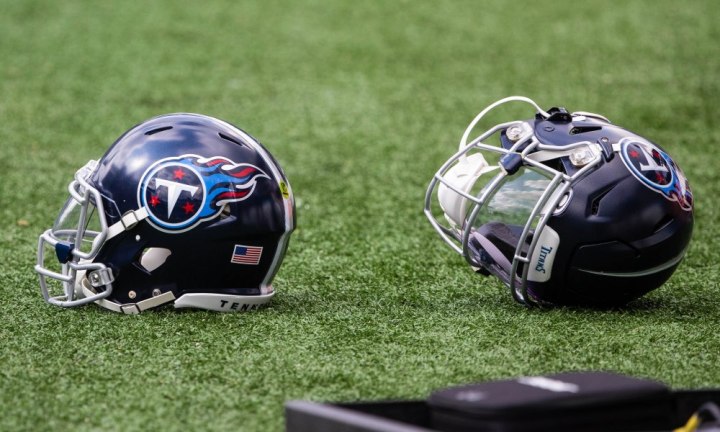
On the 29th of September, the NFL closed all Tennessee Titans facilities due to eight players testing positive for COVID-19. Along with announcing the closure of the facilities, “the NFL informed the Titans that they could not gather outside the facility for any reason” (Moraitis, 2020, pp. 6). Unfortunately, some of the Tennessee Titans players did not follow these protocols, “a group of Titans, which included quarterback Ryan Tannehill, worked out at Montgomery Bell Academy in Nashville on 30 September” (Guardian sport and agencies, 2020, pp. 2). It is very alarming that it took less than a day for these individuals to break the NFL COVID-19 safety protocols. However, because of their actions, the NFL is investigating into the team’s outbreak. Moraitis (2020) states, “The NFL reportedly has pictures of Titans players not wearing masks while at the team’s facility” (pp. 7). In their investigation, they are also looking into whether symptoms were being timely reported, and tracing devices were being worn. It is very unlikely the Tennessee Titans are going to get away with this without facing any sort of consequence. In fact, there has been a buzz going around the league that says the punishment for the Titans may even be historic, “given the news that the team apparently gathered to practice last week after expressly being told not to do so, the Titans could be facing a consequence the likes of which the NFL has never seen” (Moraitis, 2020, pp. 6).
I find it remarkable that the head coach for the Tennessee Titans or even the owner has yet to come forward and say something about the issue at hand. However, to provide the most recent update for the crisis, “The Titans’ outbreak increased to 23 on Thursday,” and the “facility remains closed with the team still prohibited from any in-person activities” (Guardian sport and agencies, 2020, pp. 5).
Since this is an evolving crisis, I wanted to look at how the players have responded so far to the situation, and provide suggestions using what we have learned so far this semester at what I think the PR team should have the representative of the Tennessee Titans say and/or do. To begin, let’s look at the Titans fullback, Khari Blasingame’s response to quarantine due to his team having a high number of cases. Bacharach (2020) states, “Blasingame tweeted an image from the TV show ‘SpongeBob SquarePants.’ In it, one of the show’s characters, Squidward, is peering through window blinds to see two other characters, SpongeBob and Patrick, having fun without him. Blasingame’s caption: ‘mood’” (pp. 3-4). This humorous tweet was not a good look for Blasingame of the Tennessee Titans. We know that reputations are threatened during any crisis, and because Blasingame was taking the situation lightly, this reflected poorly on the Tennessee Titan organization.
If I were the owner of the Tennessee Titans I would look to Coombs’ “General Guidance for Using Crisis Response Strategies” when deciding my next step. Looking through the table it is very clear there is only one option for the Titans front office, which is to form a full apology. Coombs (2017) states that an apology must be formed for “any crisis where there is evidence that the organization is the primary actor responsible for the crisis” (Table 7.2). The Tennessee Titans need to formulate a full-apology where they accept responsibility for breaking the COVID-19 safety protocols and communicate how they intend to practice better safety measures during practices. I also believe it is important for them as an organization to repair their reputation by apologizing to the school district where their players were caught secretly practicing, as well as the teams they were supposed to play these coming weeks who now have to change their schedule.
An aspect of this case study I would like to discuss with all of you is National Aeronautics and Space Administration’s public relations effort following the explosion of the Challenger. After the Apollo 13 crisis in 1971, we read that news organizations were impressed with NASA’s crisis communication efforts, and they were even nominated for a Pulitzer Prize! Although the positive feedback continued for 15 years, this response was not the case following NASA’s communication practices over the Challenger explosion. I believe NASA’s public relations succeeding the Challenger disaster is considered an example of crisis communication failure.
According to the text, Ongoing Crisis Communication by W. Timothy Coombs, common negative effects from crises include a decrease in revenue, cutbacks and/or layoff. Loss of corporate reputation, increased media scrutiny, increased government scrutiny, decreased share price, and increased social media discussions. When NASA failed to make a statement directly after the event occurred, they faced major scrutiny from both the media and the government. Waiting nearly five hours to respond was one of many mistakes they made that led to the crisis communication failure. Another mistake I found was not providing sufficient information when they spoke out about the disaster. We learned that in the aftermath of the Challenger disaster, NASA officials reported that they didn’t have evidence on what caused the explosion. I believe if NASA officials hadn’t distanced themselves from the media and presented a constant flow of information from the beginning they would not have had as many complaints from the media.
With that being said, I want to ask whether you all agree with my opinion that if NASA had practiced what they learned following Apollo 13, these mistakes would have never occurred. I would also like to ask what other mistakes you found in NASA’s public relations efforts, and what about their response made it an example of crisis communication failure?
Last week, Netflix was faced with a crisis following their release of the award-winning film Cuties. According to Todisco (2020), “Cuties follows Amy (Fathia Youssouf), an 11-year-old girl from Senegal who joins a dance team dubbed ‘the cuties’ at her school and slowly becomes more aware of her blossoming femininity, which causes tension in her traditional family” (para. 3). The film did not receive a similar reaction to the praise it got at the 2020 Sundance Film Festival from Netflix viewers. Unfortunately, “the fallout surrounding the movie began even before its Netflix debut” (TODAY, 2020, 0:46). A month before Cuties began streaming, Netflix had to apologize and pull a poster that was used to promote the film. According to Todisco (2020), “Netflix issued a public apology following backlash over the Cuties marketing poster, with critics claiming it sexualized children” (para. 12). The apology states, “We’re deeply sorry for the inappropriate artwork that we used for Mignonnes/Cuties. It was not OK, nor was it representative of this French film which won an award at Sundance. We’ve now updated the pictures and description” (Netflix, 2020).
Since its official Netflix release, Cuties and Netflix have continued to face the growing backlash from its viewers. The film has been accused of sexualizing children and Netflix has been accused of supporting it. Viewers have taken to Twitter to share their response using the hashtag, #CancelNetflix. Some have gone far enough to actually cancel their Netflix subscriptions, and “over 598,000 people have signed a Change.org petition titled ‘Cancel Netflix subscription,’ accusing the film of exploiting children, showing underage girls ‘dressed provocatively, dancing sexually’ and being rate “only for adult viewers” (Frishberg, 2020, para. 8). As of today, Netflix has not issued a response to the hashtag, nor have they announced plans to remove the French coming-of-age film.
I had a very tough time assessing this situation. As a public relations practitioner, I know that any crisis involving children can be hypersensitive. However, I came to the conclusion that I believe Netflix should not remove the film from its streaming platform. I do think they should produce a public statement saying that they don’t agree or support the tweets claiming the film sexualizes children. It would even be a good idea for their spokesperson to address the Director, Maïmouna Doucoure, main point of the film, “the real question of ‘Cuties’ is can we as women truly choose who we want to be beyond the role models that are imposed upon us by society” (TODAY, 2020, 2:28).
When relating this to our assigned reading, I found a few commonalities with the case study we were given this week. One being, both crisis management teams for Canadian Jet and Netflix were dealing with a challenge paracrisis, “when the organization is confronted by discontented stakeholders with claims that it is operating in an inappropriate manner” (Coombs, 2019, ). Netflix’s crisis management team was faced with two decisions, first, “should the organization address the challenge,” and second, “how should the organization respond to the challenge if the decision is to respond” (Coombs, 2020, p. 53). I think Netflix did a good job by choosing to release an apology for this paracrisis. However, “the challengers provide a means of assessing the effectiveness of the paracrisis response in reducing the threat. If challengers end the challenge, the threat is reduced. If challengers escalate the challenge and successfully recruit other stakeholders to view the organization as irresponsible, the threat reduction has failed” (Coombs, 2019, p. 53). When Netflix went ahead and released the film and ignored the continued backlash from the challengers, their paracrisis developed into a full blown crisis. I hope they come up with a statement soon addressing the fact that they do not agree with the statements that they support the sexualization of children.
References
Coombs, W. T. (2019). Ongoing crisis communication planning, managing, and responding (5th ed.). Thousand Oaks, CA: Sage Publications.
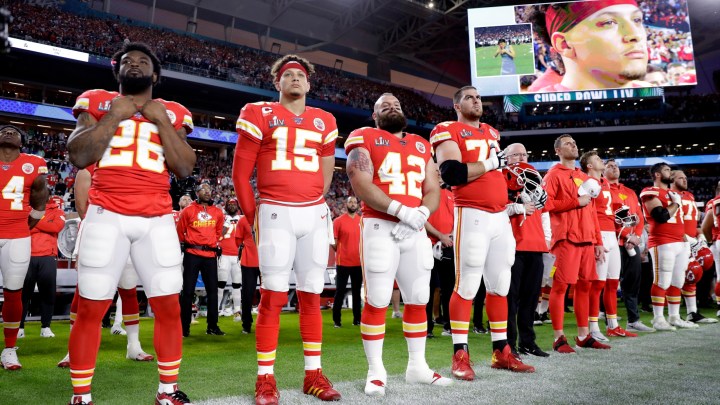
This week’s crisis of the week is the NFL’s response to the Black Lives Matter movement. I chose this crisis in light of the 2020 season opener between the Kansas City Chiefs and the Houston Texans being the day this assignment is due.
The league was brought into the national discussion about police brutality and systematic oppression back in 2016 when the San Francisco 49ers quarterback, Colin Kaepernick knelt during the national anthem to show he wouldn’t “stand for a country that oppresses black people and people of color” (Mather, 2019, para. 6). At the time, the league responded to his protest by saying, “Players are encouraged but not required to stand during the playing of the national anthem” (Mather, 2019, para. 9). Fast forward to May 23, 2018, NFL owners ruled that players could no longer kneel during the national anthem. The league announced that if players felt the need to protest they were welcome to stay in the locker room during the national anthem.
However, there has been a recent shift in the league’s public stance on the peaceful protest movement. When a dozen black NFL stars released a powerful video in which they asked the NFL to “admit it erred in its response to peaceful NFL player protests of police brutality and systemic oppression, condemn racism and affirm that Black Lives Matter” (Wells, 2020). The league finally listened. Following that day, NFL commissioner, Roger Goodell responded to the video posted on social media by the players by posting his own video from the NFL’s official Twitter account. In the video, Goodell said, “We, the National Football League, condemn racism and the systematic oppression of Black People. We, the National Football League, admit we were wrong for not listening to NFL players earlier and encourage all to speak out and peacefully protest. We, the National Football League, believe Black Lives Matter” (Wells, 2020, para. 3). He also acknowledges in the video that the NFL was “wrong for not listening to FL players earlier and encourage all to speak out and peacefully protest” (Wells, 2020, para. 4). Although Goodell didn’t mention Kaepernick’s name in his statement, the shift in the NFL’s stance on peaceful protesting says enough on how much power the NFL players have over the organization.
With that being said, I would like to tie this crisis to this week’s reading. According to Coombs (2019), the power in crisis management is “the ability of the stakeholder to get the organization to do something it would not do otherwise” (p. 45). The NFL changing its stance on peaceful protesting during games is a real-world example that demonstrates this concept.
When the group of players, including Super Bowl LIV champion Patrick Mahomes, Deshaun Watson and Saquon Barkley composed the video and posted it to Twitter it went viral. The video gained massive positive feedback from other players and organizations. Doug Williams, the first Black quarterback to start in a Super Bowl stated that Mahomes’ involvement in the video was huge, “with all these young people out here marching in the streets and demanding change, it’s a different time right now. You see that there are so many young people leading. It says a lot he wanted to be involved in pushing for that change. It was very powerful” (Reid, 2020, para. 11). By these famous athletes using their voices, working in coalition with Black organizations, and taking a stand against their “employer” they proved as stakeholders they held the stronger power over the NFL.
The stakeholder (NFL players) created the video that went viral and pressured the organization (Goodell and NFL) to check off all the items they requested. The power of the stakeholders and the video they created forced the organization to do something they would not do otherwise which was to publicly acknowledge they were wrong in the first place by not listening to the NFL players earlier.
References
Coombs, W. T. (2019). Ongoing crisis communication planning, managing, and responding (5th ed.).
Thousand Oaks, CA: Sage Publications.
Mather, V. (2019, February 15). A timeline of Colin Kaepernick vs. the N.F.L. The New York Times.




 Claire Lee Hawkins